
DIGNITY, INDEPENDENCE, AND CONNECTION: JCCGCI HOLOCAUST SURVIVOR SUPPORT SERVICES MARKS AN EXTRAORDINARY FIRST HALF OF 2026

A JCCGCI Holocaust Survivor client meeting with President Trump
The Holocaust Survivor Support Services program of JCCGCI (HSSS) is one of the largest Holocaust survivor social service providers in the country, providing comprehensive, compassionate support to thousands of men and women who endured one of history’s greatest atrocities. We take profound pride in helping survivors live with the dignity, independence, security, connection, and sense of purpose they deserve.
Since its creation, Holocaust Survivor Support Services has grown steadily, expanding its reach and deepening its impact year after year. During the first half of 2026 alone, HSSS has already served more than 4,000 Holocaust survivors across its broad continuum of programs. Behind every statistic is an individual survivor – a person with a unique history, unique needs, and a right to receive the personalized support necessary to live as independently and meaningfully as possible.
Living with dignity requires much more than meeting fundamental needs. It means having a say in how you live, maintaining independence to the greatest extent possible, remaining connected to others, and having someone in your corner when things get hard. That principal guides HSSS in every service it provides, with programs designed not only to promote health and wellbeing, but also to preserve independence, reduce social isolation, and ensure that survivors know they are valued, supported, and never alone.
Our homecare program brings essential assistance directly into the homes of frail and homebound survivors, helping with the everyday activities that can become increasingly difficult with age and enabling survivors to remain safely and comfortably in the familiar surroundings they cherish. Homecare hours are already running about 13% ahead of last year’s pace, and at the current rate we expect to provide over 1.7 million hours of homecare before year’s end.
“Every survivor we serve has already shown the world what resilience looks like,” says Yehudah Zellermaier, LCSW and Holocaust Survivor Support Services Managing Director. “Our homecare services help make sure their final chapters are lived with comfort and respect, right where they feel most at home.”
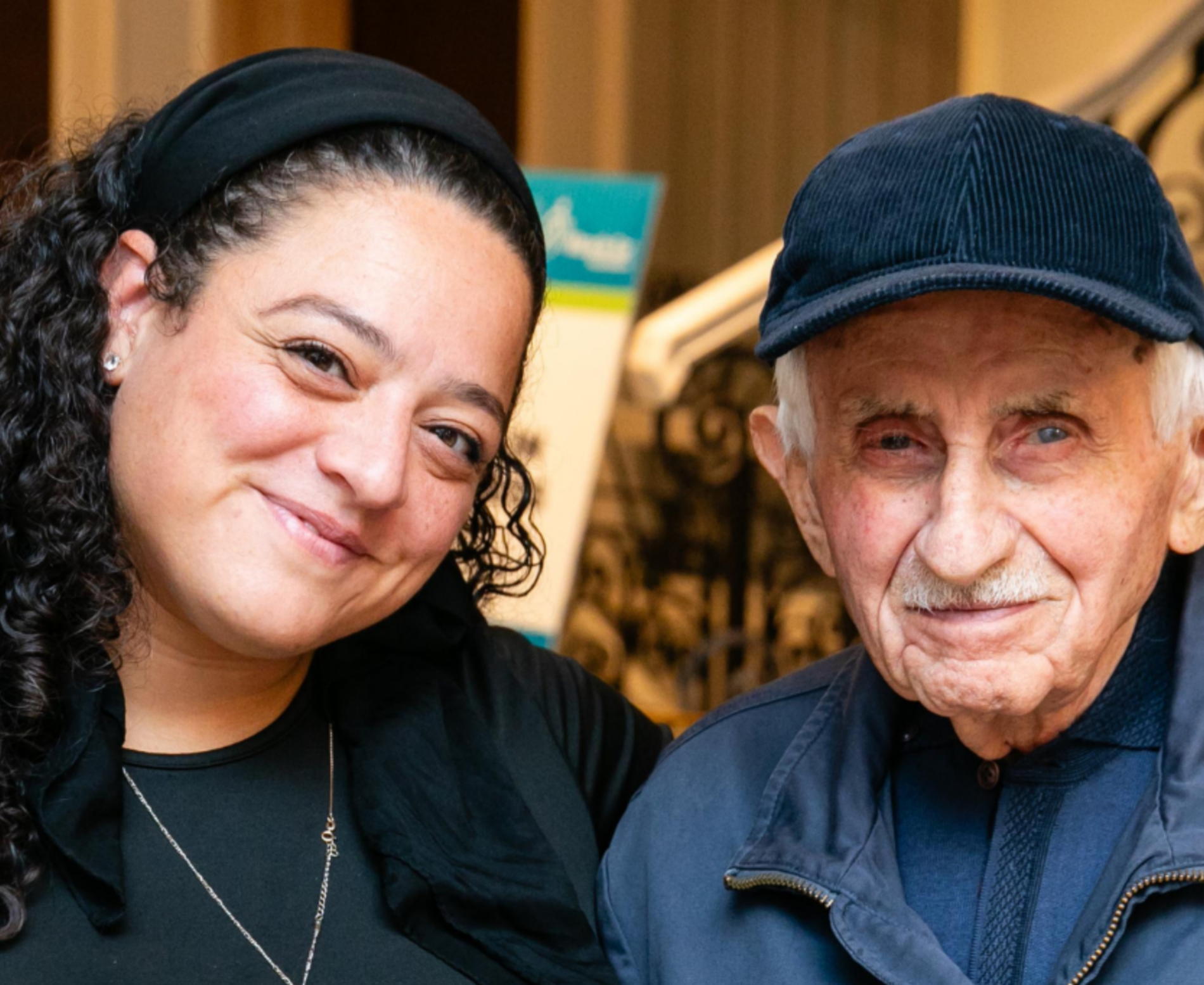
A Holocaust Survivor with Zehava Birman Wallace, LCSW, Director of ‘Club 2600’ Socialization for Holocaust Survivors, Holocaust Survivor Case Management, & Sunday Older Adult Center Program
While homecare helps alleviate many of the challenges of daily living, survivors often confront complex benefit, medical, financial, and bureaucratic issues that require professional advocacy. When a survivor is denied a benefit they’re entitled to, or faces a medical decision they may not know how to navigate, HSSS case workers step in to advocate on their behalf and help them access the benefits, services, and resources to which they are entitled. As of July, the case management team has been averaging over 1,200 sessions a month, helping ensure that survivors do not have to navigate complicated systems on their own.
While healthcare and needs-based advocacy are crucial, practical challenges remain even once benefits are secured. Access to nutritious food and reliable transportation can be equally critical to a survivor’s ability to remain healthy, independent, and connected to essential services. HSSS therefore provides both specialized transportation and homebound meal services. So far this year, the transportation program has already provided more than 15,000 free rides to survivors facing physical limitations, financial strain, or safety concerns, helping them travel to medical appointments and essential services they may otherwise miss. Additionally, in just four months, our homebound meals program has delivered over 2,700 healthy meals directly to the doorstep of survivors, providing both nourishment and another vital layer of support for those aging in place.
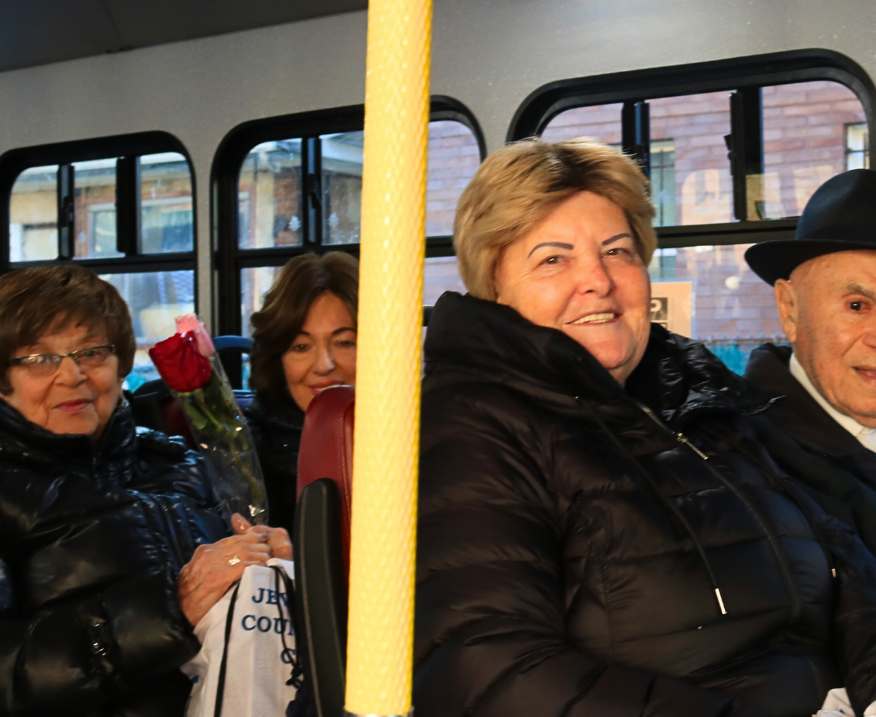
A group of our survivors riding a JCCGCI bus
Dignity isn’t just about having a ride or a meal, however; it’s about having someone to share life with. Social isolation is one of the most common and painful challenges facing older Holocaust survivors, many of whom have outlived spouses, siblings, lifelong friends, and other members of their support networks. To combat loneliness, our Connect2 Friendly Visiting for Holocaust Survivors program pairs trained volunteers with survivors for home visits, innovative activities, and virtual and in-person social programming. The program creates meaningful, often transformative relationships between survivors and volunteers. Already this year, Connect2 has facilitated over 2,150 interactions and 1,250 hours of companionship, helping survivors remain socially engaged, valued, and connected to the broader community.
“The most heartwarming and impressive thing to me,” says Connect2 Friendly Visiting Director Elisheva Lock, MPA, LCSW, “is the diversity of age and culture of the volunteers that gravitate towards this awesome opportunity to get involved with our dear Holocaust survivors.”
For survivors who are mobile and seeking community, our Club 2600 program offers regular opportunities to socialize, celebrate, and build community with fellow survivors. Every month dozens of survivors come together for an afternoon of food, music, engaging activities, and the kind of easy conversation and instant connection that can be increasingly hard to come by.
“For a lot of our survivors, Club 2600 is the one afternoon a month they know they’ll be surrounded by people who understand exactly what they’ve lived through,” says Zehava Birman Wallace, LCSW, Director of ‘Club 2600’ Socialization for Holocaust Survivors, Holocaust Survivor Case Management, and Sunday Older Adult Center Program. “Walking into an event feels like coming to a family reunion.”
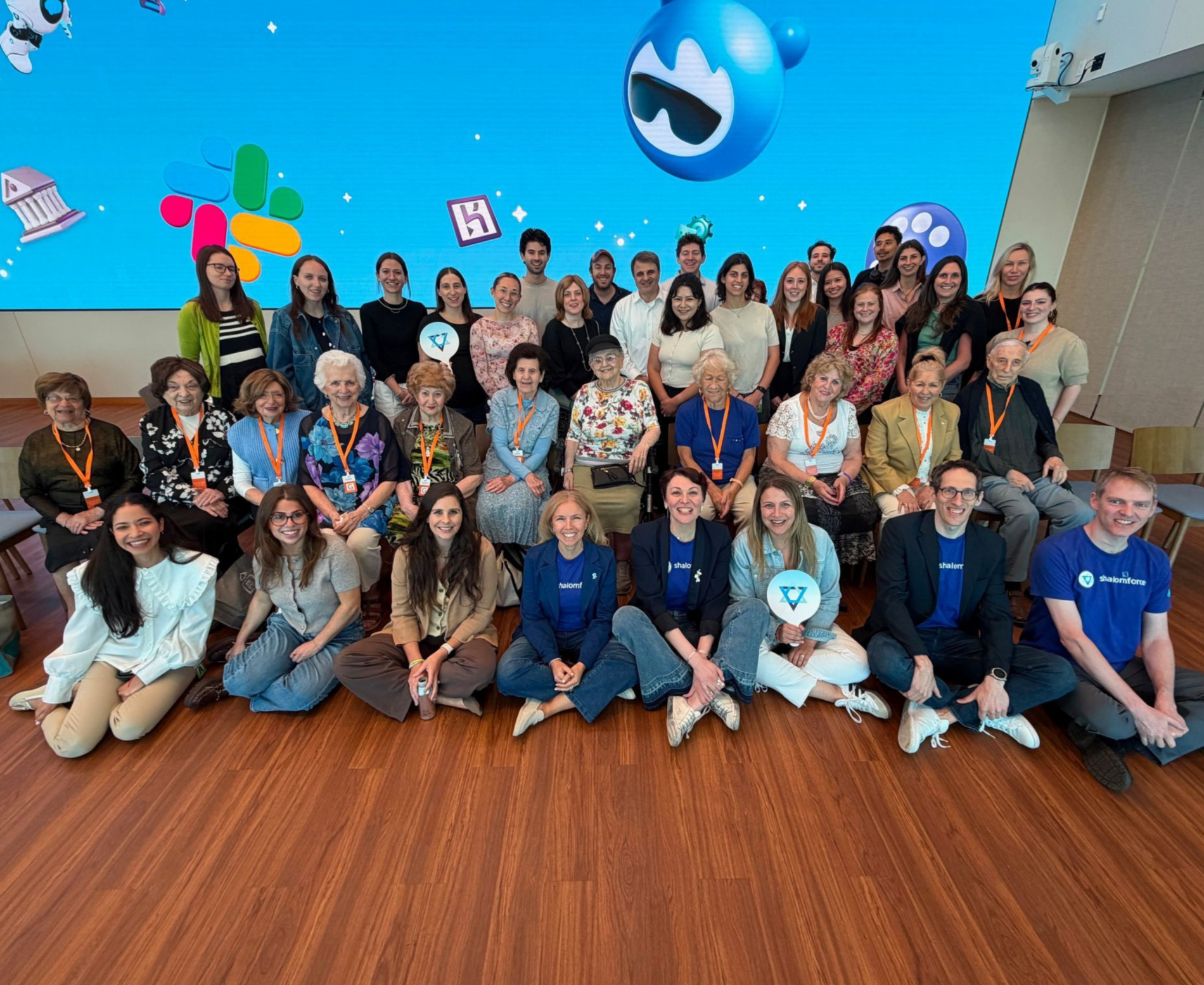
That spirit carried into some of this year’s most memorable Club 2600 moments. In January, JCCGCI partnered with L’Oréal’s employee resource group, L’Oréal Mishpachah, to host 18 survivors for a full day of gifts and luxury treatments at the L’Oréal Tech Center in Hudson Yards. Our corporate partners also created memorable experiences through KPMG’s Challah Bake and Salesforce’s hosted lunch event, bringing survivors and volunteers together around shared culture, personal stories, friendship, and celebration.
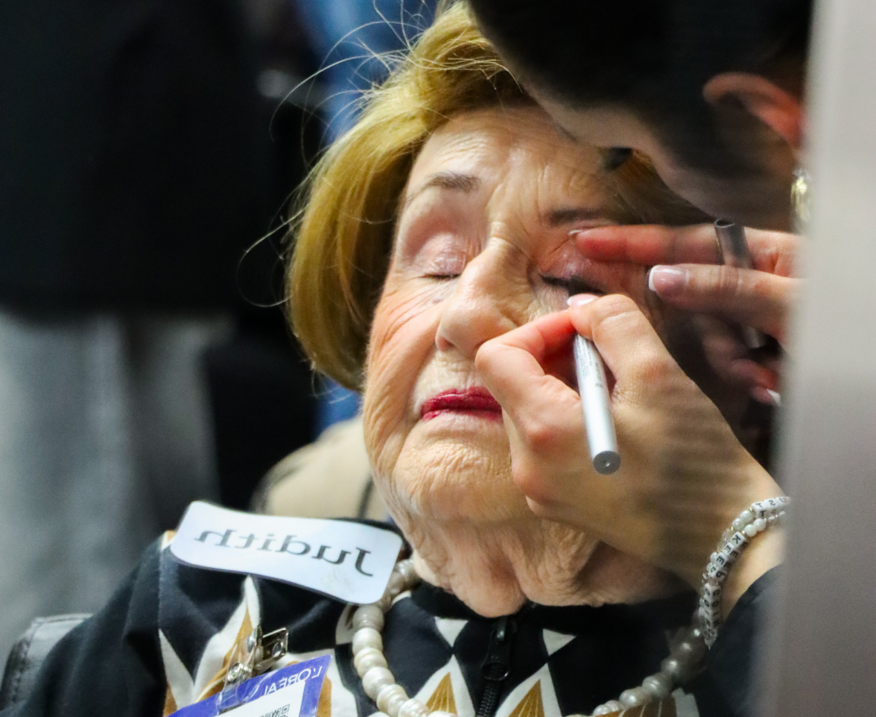
A Holocaust Survivor having her makeup professional applied at the L’Oréal Tech Center
Seven of our survivors also had an extraordinary opportunity this spring to bring their voices and experiences to a broader audience. In partnership with the NYC Office for the Prevention of Hate Crimes, JCCGCI interviewed seven survivors, who spoke movingly about their experiences with hate and the importance of confronting it. In April, JCCGCI’s Yom HaShoah commemoration with The Blue Card featured a panel of three survivors who shared firsthand testimony in an intimate setting.
In another particularly moving experience, Club 2600 welcomed Jonny Daniels and the Survivor Torah Project, an initiative centered on a Torah scroll that a family entrusted to their Polish neighbors before being deported to Treblinka. Hidden for decades and later recovered, the Torah is now being restored one letter at a time by Holocaust survivors themselves. For JCCGCI’s survivors, participating personally in the restoration transformed a precious artifact that had endured the devastation of the Holocaust into a living symbol of Jewish survival, continuity, and renewal.
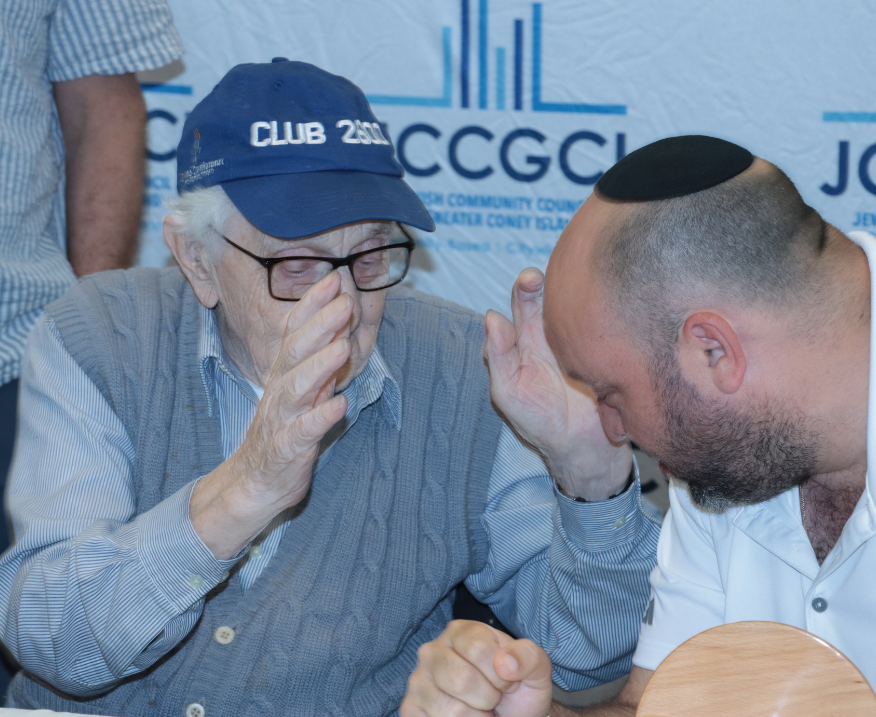
A Holocaust Survivor connecting with Jonny Daniels of the Survivor Torah Project
In May, in a joyous celebration of resilience and community, 18 of our survivors were honored on the field at Maimonides Park for the Brooklyn Cyclones’ Jewish Celebration Day, each taking part in a ceremonial first pitch in front of a stadium full of fans. Most recently, JCCGCI provided transportation for members of our Holocaust survivor community to visit the White House, where they met with President Trump and Secretary of State Marco Rubio in the Oval Office and had the opportunity to bring the concerns and needs of Holocaust survivors directly to the highest levels of the federal government.
JCCGCI is committed to providing the most comprehensive support possible to our Holocaust survivor community, and none of this work would be possible without the extraordinary dedication, compassion, and professionalism of the HSSS team. “Every number in this report represents someone who trusted us to show up for them,” says Yehudah Zellermaier, LCSW and Holocaust Survivor Support Services Managing Director. “That trust is the accomplishment. Everything else is just how we honor it.”
Through challenges and celebrations alike, every member of the HSSS team is united by a common mission: to honor those who survived the unimaginable by ensuring that they can live their later years with dignity, security, independence, companionship, and care. JCCGCI is immensely proud of what our HSSS team has accomplished during the first half of 2026, and even more proud of what those accomplishments mean in the daily lives of the survivors we are privileged to serve. As their needs continue to evolve and grow, our commitment remains unwavering: to be there for our survivors, every day, in every way we can.
👉 Join our JCCGCI Holocaust Survivor Response Network WhatsApp Chat for the most up to date news and stories regarding our Holocaust Survivor Support Services: https://tinyurl.com/JCCGCIHSRNG
👉 Want to learn more about our Holocaust Survivor Support Services? Visit https://www.jccgci.org/programs/older-adult-services/services-for-holocaust-survivors
Jewish Community Council of Greater Coney Island (JCCGCI) is a community-based organization with a citywide scope, providing a wide-spectrum of senior citizen, career, educational, crime-reduction, mental health, community revitalization and related services benefiting all segments of the population. JCCGCI is also a technical assistance provider, offering capacity building services to nonprofits in all five boroughs through its NonProfit HelpDesk division (www.nphd.org). With 40 program sites throughout New York City staffed by almost 400 social service professionals, JCCGCI assists an average of upwards of 2,500 needy individuals and families each day.
JCCGCI’s Holocaust Survivor Support Services is one of the largest in the world, providing critical assistance to over 4,000 Holocaust Survivors annually. Services include Homecare, Transportation, Case Management, Friendly Visiting, Medicaid Appeals, Socialization, and Home Delivered Meals.
|
|
|